
Effective July 1, 2026, Florida’s new Operations Charge Law (SB 606) changes how restaurants and other public food service establishments disclose mandatory fees.
The law does not prohibit surcharges or mandatory operations charges. Instead, it requires restaurants to clearly disclose them before a customer orders and itemize them on the receipt.
The purpose is simple:
No surprises at checkout.
Unfortunately, many restaurants have been sold “cash discount” or “dual pricing” programs that, in reality, function as surcharges under a different name.
This article explains the difference, how Florida’s new law fits into existing Visa rules, and how to make sure your pricing program is compliant.
What Is Florida SB 606?
Florida’s Operations Charge Law requires restaurants that impose a mandatory operations charge to:
- Clearly disclose the charge before the customer orders.
- Display the charge on menus, ordering platforms, and wherever prices are presented.
- Itemize the charge on the customer’s receipt.
- Prevent customers from being surprised by mandatory fees at checkout.
The law is focused on transparency, not prohibiting legitimate pricing models.
However, it also shines a spotlight on payment programs that increase the customer’s price after the order has already been placed.
Why This Law Matters
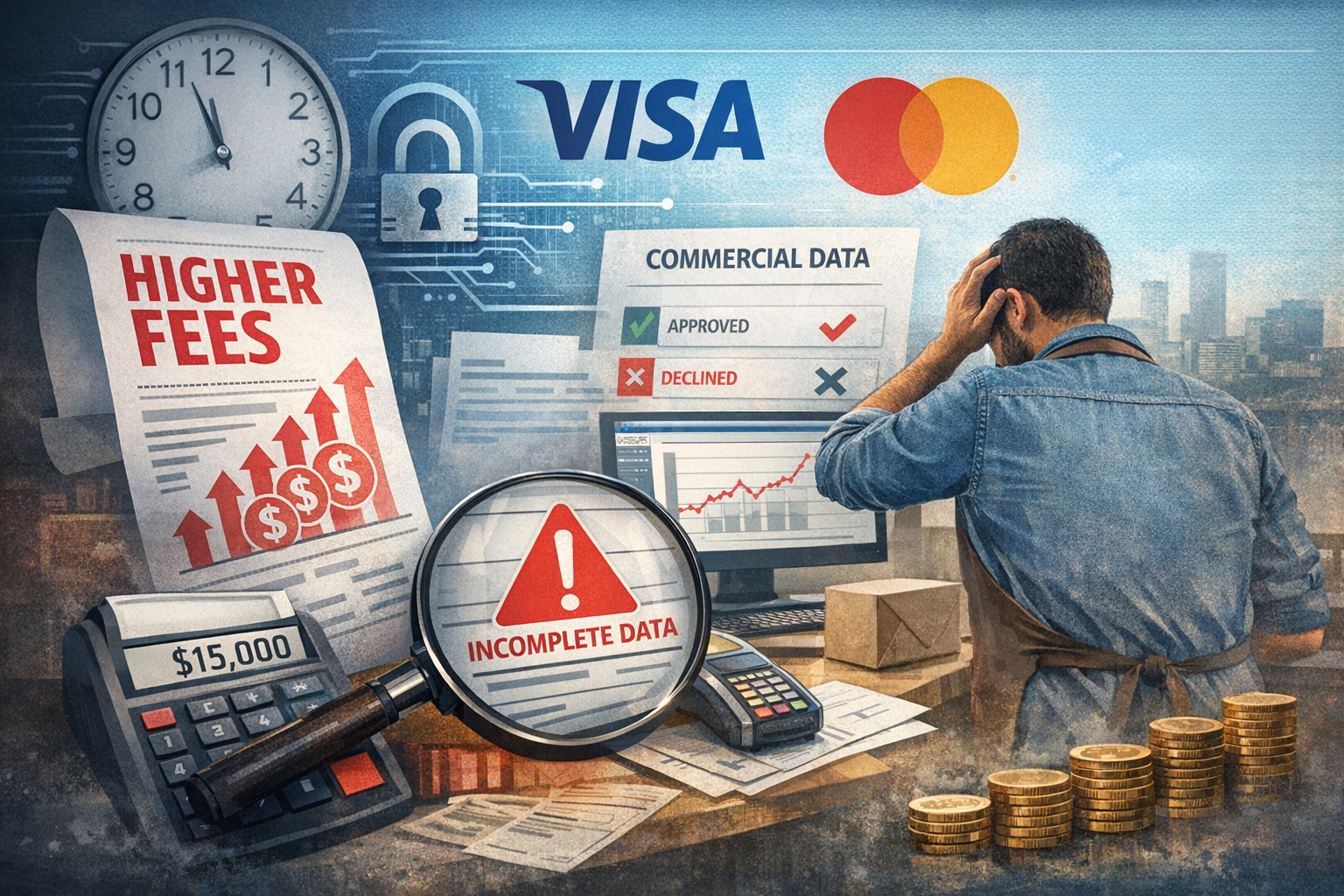
Before SB 606, merchants operating questionable surcharge programs primarily faced enforcement from Visa and Mastercard.
A customer could report the merchant to the card brands, which could require corrective action and assess significant compliance fines.
Now, restaurants operating in Florida also have a state law requiring transparent disclosure of mandatory charges.
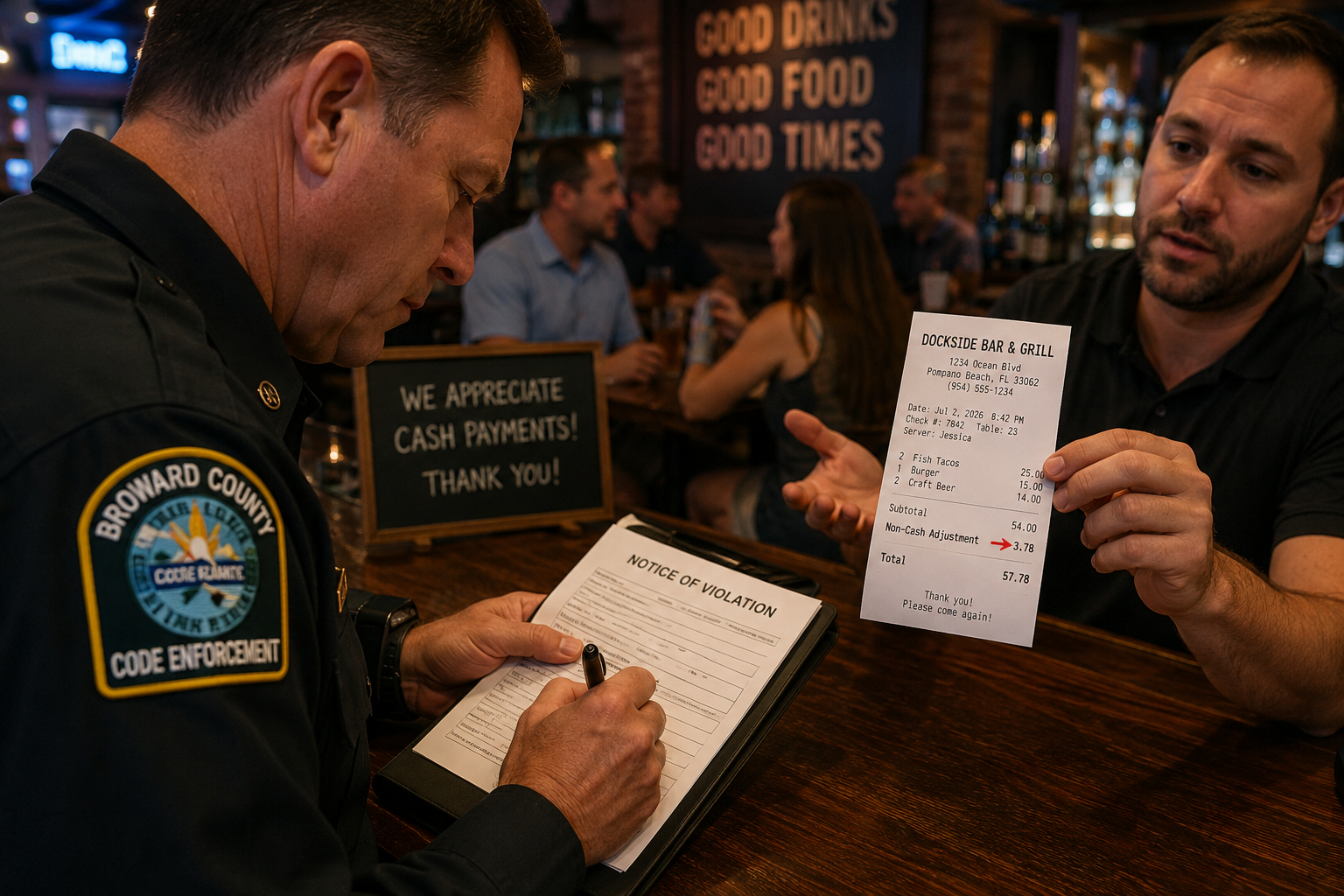
In other words, compliance is no longer just a card brand issue. It is now also a state disclosure issue. We may see local officials ticketing or fining restaurants in the near future.
A Surcharge Is Still a Surcharge
Some processors market their programs using names like:
- Non-Cash Adjustment
- Card Adjustment
- Service Fee
- Operations Fee
- Cash Discount
- Dual Pricing
Changing the name doesn’t necessarily change what the pricing model actually is.
Regulators, courts, and the card brands generally look at how the transaction works, not what it is called.
If a customer pays more simply because they choose to use a card, the transaction may function as a surcharge regardless of the terminology.
Calling a surcharge a “cash discount” doesn’t change what it is, just like calling a speeding ticket a “travel convenience fee” doesn’t make it legal.
Visa Already Required Surcharge Signage
Long before Florida passed SB 606, Visa already required merchants operating surcharge programs to provide notice to customers.
That includes:
- Signage at the entrance.
- Signage at the point of sale.
- Proper notification to Visa before beginning a surcharge program.
- Compliance with Visa’s operating rules.
Visa publishes its official surcharge requirements here:
https://usa.visa.com/Forms/visa-rules.html
Visa also provides a process for cardholders to report suspected surcharge violations.
This means non-compliant merchants may be reported by:
- Customers
- Competitors
- Payment processors
- Acquiring banks
SB 606 creates an additional layer of compliance for Florida restaurants. We likely will see city enforcement.
True Cash Discounts and Dual Pricing Are Different
Many people confuse surcharging with cash discounts or dual pricing.
They are not the same thing.
A legitimate cash discount program works much like pricing at many gas stations.
The higher card price is the advertised price.
Customers who choose to pay with cash receive a discount.
Example:
Regular Card Price
Coffee ………… $5.00
Pay with cash?
Receive a $0.20 cash discount.
Final Cash Price
Coffee ………… $4.80
Nothing was added at checkout.
The customer simply earned a discount for choosing cash.
That is how a legitimate cash discount or dual pricing program is designed to work. SB 606 does not affect a true cash discount or dual pricing program.
What Isn’t a Cash Discount?
This is where many merchants get into trouble.
Imagine your menu displays:
Burger ………… $10.00
The customer orders based on that price.
When the bill is printed, it now shows:
Subtotal ………… $10.00
Card Price ………. $10.35
Cash Price ………. $10.00
At that point, the customer discovers they’ll pay more simply because they chose to use a card.
That is the type of surprise Florida’s new Operations Charge Law was designed to eliminate.
A true cash discount starts with the regular card price and rewards customers who pay with cash.
It does not advertise one price and then increase it at checkout.
Debit Cards Create an Even Bigger Compliance Issue
The compliance risk doesn’t stop with Florida law.
The Durbin Amendment prohibits payment card networks from allowing merchants to surcharge debit card transactions.
If a pricing model increases the amount charged because the customer used a debit card, simply calling the program a “cash discount” does not change how regulators or the card brands are likely to evaluate it.
Substance matters more than labels and the merchant could be warned and/or fined of 1k up to 50k will follow depending on the severity and the months since the first warning.
What Programs Does SB 606 Really Affect?
In practice, this law primarily impacts two pricing models.
1. Traditional Surcharge Programs
Restaurants that add a fee for paying with a credit card must comply with both Visa’s rules and Florida’s new disclosure requirements. Card brand rules already required signage to be posted. There is a now a Florida law that also says customers must be notified.
2. Programs That Function Like Surcharges
Some processors market pricing models using terms like:
- Non-Cash Adjustment
- Card Adjustment
- Service Charge
- Operations Charge
- Cash Discount
If the customer’s price increases because they chose to pay with a card, the pricing model may function as a surcharge regardless of its marketing name.
Simply changing the label does not necessarily change the compliance obligations.
How to Tell If Your Program Is Properly Structured
Ask yourself one simple question:
What price does the customer see before ordering?
If the posted price is the card price, and customers paying cash receive a discount, you’re following the traditional cash discount or dual pricing model and SB 606 does not affect you.
If the posted price is the cash price, and customers paying with a card pay more at checkout, your program deserves a careful compliance review. Not only are you at risk for Visa/Mastercard fines, now you have to worry about city or state penalties.
Don’t Wait for a Complaint
Historically, merchants with non-compliant pricing faced complaints to Visa or Mastercard.
Today, Florida restaurants also need to consider the state’s Operations Charge Law.
Compliance isn’t just about avoiding card brand fines.
It’s about protecting your business, maintaining customer trust, and avoiding unnecessary regulatory scrutiny.
Ethical Pay Pro Can Help
Every restaurant is different.
Some businesses benefit from:
- Fully compliant surcharge programs.
- True cash discount programs.
- Properly structured dual pricing.
- Traditional processing with transparent pricing.
The key is choosing the right pricing model and implementing it correctly from the start.
At Ethical Pay Pro, we help restaurants and retailers review their payment acceptance programs to ensure they comply with applicable card brand rules and evolving state disclosure requirements.
If you’re unsure whether your current program complies with Florida SB 606, Visa’s operating rules, or federal debit card requirements, we can help you evaluate your options before a compliance issue becomes an expensive problem.
Helpful Resources
Florida Senate – SB 606 (Operations Charges)
https://www.flsenate.gov/Session/Bill/2026/606
Visa Merchant Rules