

14 Peptides, Category 2, and Why This Is Really a Payment Processing Story
There has been a wave of discussion around peptides, federal enforcement, and what happened under the Biden administration.
Here is what actually matters.
A federal framework was created to allow compounding pharmacies to produce customized medications for individual patients. The purpose was simple: if a commercial drug did not work for a patient due to allergies, formulation issues, or availability problems, a licensed pharmacy could compound a tailored version.
Peptides fell into that ecosystem.
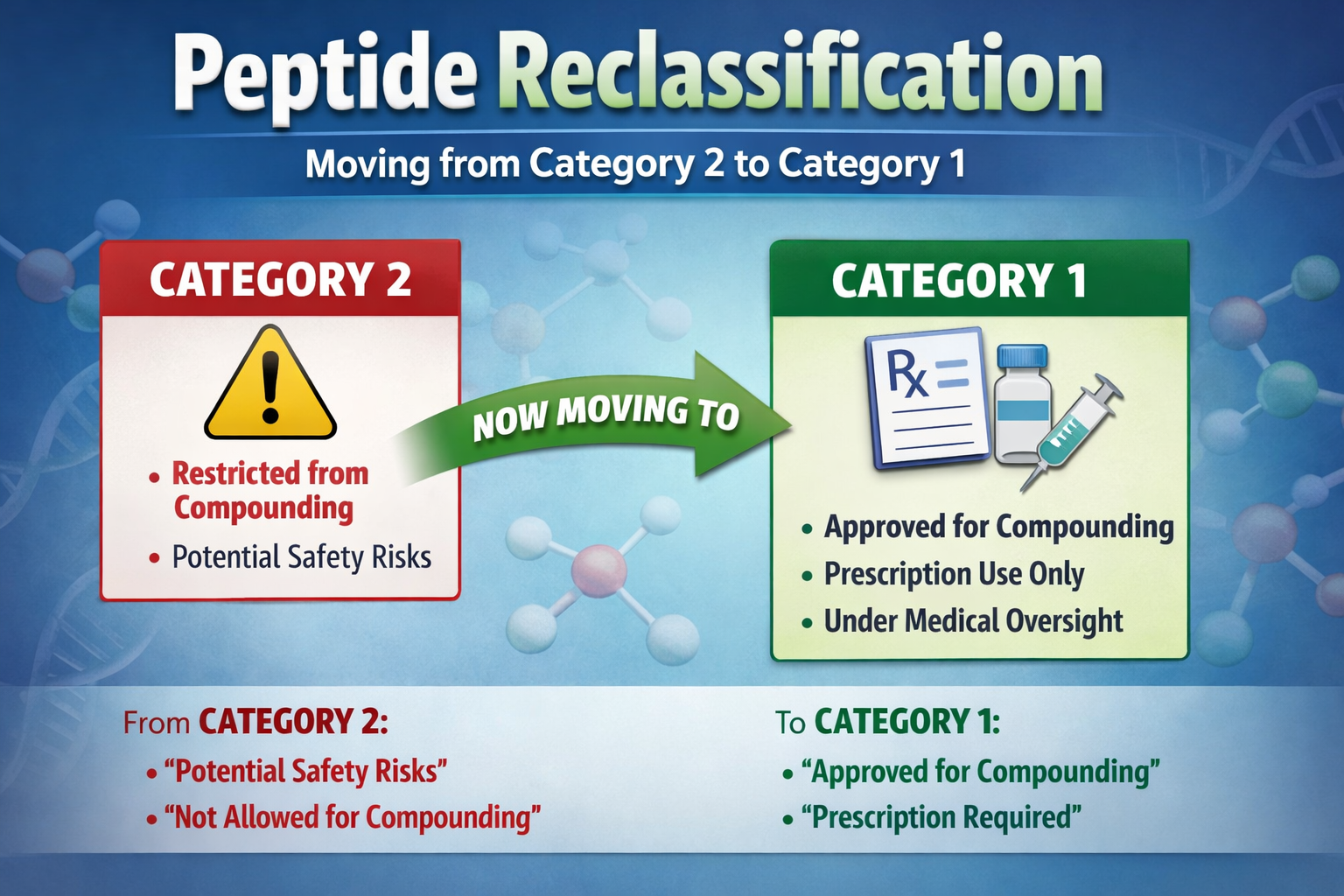
Over time, regulators moved a group of peptides onto the FDA’s Category 2 list. Category 2 is reserved for substances that raise significant safety concerns and generally should not be compounded.
The controversy is this:
Under the governing framework, substances are supposed to move based on safety signals. Efficacy is not the test. The standard is safety. Critics argue that certain peptides were moved without clear safety signals, effectively shrinking the legal compounding market.
When that happens, something predictable occurs.
Demand does not disappear.
It moves.
Manufacturing shifts to “research use” labeling. Animal-use disclaimers appear. Black and gray market suppliers expand. Oversight decreases. Quality control weakens. The legal domestic market contracts.
And when the legal market contracts, so do domestic payment processing options.
Banks do not like regulatory ambiguity. When a category looks unstable, they exit. That vacuum gets filled by offshore aggregators charging 8 to 12 percent with rolling reserves and collapse risk.
So while the headlines focus on bans, categories, and politics, the real downstream impact is financial infrastructure.
Here is the part most people miss:
When products move into a clearly regulated framework with prescription oversight and licensed medical supervision, quality improves. Oversight improves. Stability improves.
Less gray market means:
- Better product consistency
- Licensed physician oversight
- Documented patient workflows
- Stronger domestic banking relationships
This is not a political argument.
It is a structural one.
If peptides operate in a defined medical lane with proper oversight, legitimate merchants gain leverage. Domestic processors gain clarity. Telemedicine models become viable. Aggregator dependency shrinks.
That is why this is not just a regulatory story.
It is a payment processing story.
Now let’s break down what actually changed and what your options are.
The 14 Peptides Moving to Category I:
The peptides widely discussed as moving to category I include:
- BPC-157
- TB-500 (Thymosin Beta-4)
- CJC-1295
- Ipamorelin
- Tesamorelin
- Sermorelin
- Hexarelin
- GHRP-2
- GHRP-6
- MK-677 (Ibutamoren)
- IGF-1 LR3
- PEG-MGF
- PT-141 (Bremelanotide)
- AOD-9604
Category I classification means FDA will not block compounding.
That immediately changes who can process you and under what structure.
What Actually Changed
Before this shift:
- Most peptide sellers operated in gray market lanes
- Banks avoided the category
- Offshore aggregators filled the gap
- Domestic approvals were fragile
Now:
- Doctor-backed peptide clinics have stronger footing
- Telemedicine models gained leverage
- The compliant path widened
Important: Category I does not mean open season.
Most processors still will not approve peptide merchants unless there is a licensed physician oversight and LegitScript certification.
But the difference is this:
If you structure properly, domestic processing is available.
If you do not, you are still in gray market territory.
Your Peptide Payment Processing Options
There are only two real lanes.
Option 1: You have a Doctor on Staff (or partner with one)
If you operate with:
- Licensed MD or DO oversight
- Valid prescription workflow
- Telemedicine intake
- No banned peptides
You can qualify for domestic peptide payment processing.
What That Looks Like
- U.S. MID merchant account
- Standard gateway to key credit cards or invoice payment links
- 3.5% to 4% processing
- Next-day funding
- No 10% rolling reserve
At $500,000 per month:
- 4% = $20,000
- 10% = $50,000
- $30,000 monthly difference
- $360,000 annually
That margin alone often justifies medical infrastructure.
Real Example:
- Licensed doctor on staff
- LegitScript-backed
- Prescriptions issued properly
- Does not sell banned peptides
- Pays 3.95%
- Gets funded next day
No rolling reserve.
No aggregator collapse cycle.
No sudden shutdown emails.
They still operate in a regulated category.
But they built infrastructure instead of renting instability.
Option 2: Offshore Aggregators
If you:
- Sell peptides without prescriptions
- Offer banned compounds
- Avoid medical oversight
You are relying on offshore aggregators.
Expect:
- 8% to 12% processing
- 5% to 10% rolling reserve
- Shared master MID
- Sudden shutdown exposure
Most aggregators last 6 to 18 months before getting caught.
When they collapse, one of two things happens:
- The operator migrates everyone to a new master MID
- Funds and reserves disappear
Real Example:
- Processing $500k per month
- Domestic MID
- Selling peptides
- Operating over a year
New CFO asks for a rate reduction.
Processor reviews account.
Identifies peptides.
Terminates overnight.
They scramble into aggregator processing at 10%.
Real Example:
- Uses aggregator for 2 years
- Accepts 10% rolling reserve
- Runs 10% of volume through a backup aggregator
When the primary aggregator collapses:
- Reserve disappears
- Backup becomes primary
- They search for a new backup
Lost reserves become operating expense.
The Real Risks of Offshore Aggregators
If you are searching “offshore merchant account for peptides,” understand this:
- You do not own the MID
- Funds can freeze without notice
- Rolling reserves often disappear
- Limited chargeback support
- Higher decline rates
- Visa and Mastercard monitoring exposure
- Cross-border compliance flags
- Personal liability exposure
That does not mean your processing is secure.
These programs exist under a master MID that can be terminated at any time.
When that happens, everyone underneath goes dark.
What Merchants Actually Need to Know
- Most processors still will not touch peptides
- Category I does not eliminate risk
- Domestic processing exists with medical oversight
- Offshore aggregators remain temporary infrastructure
- The fee spread compounds fast at scale
This is not just regulatory noise.
This is a structural opportunity.
If you are currently gray market, this is your window to restructure.
Apply for Peptide Payment Processing
If you:
- Currently use an offshore aggregator
- Want domestic processing with MD oversight
- Plan to launch telemedicine
- Need a high-risk peptide merchant account
Start a Conversation About Your Peptide Payment Processing Options: